Why restaurants shouldn’t rely on AI for all their social media graphics

I want to start by saying I’m not anti-AI.
In fact, I actively advocate its use in the right circumstances. In a previous article, I wrote about how AI can be extremely useful for improving food photography by enhancing lighting, sharpening details, and cleaning up backgrounds. Used properly, it’s a brilliant assistant.
But assistant is the keyword here.
What I don’t advocate is letting AI create all of your social media graphics.
Because we’re rapidly entering the era of content that people are starting to call AI slop: endless, glossy, slightly-off visuals that look impressive for half a second and then dissolve into the scroll.
And now, more than ever, hospitality businesses can’t afford to blend in.
AI slop has no impact.
The biggest issue with AI-generated graphics isn’t that they look terrible. It’s that they have no impact.
They look fine, polished, on-trend, technically “correct”.
But they don’t "land" with the customer.
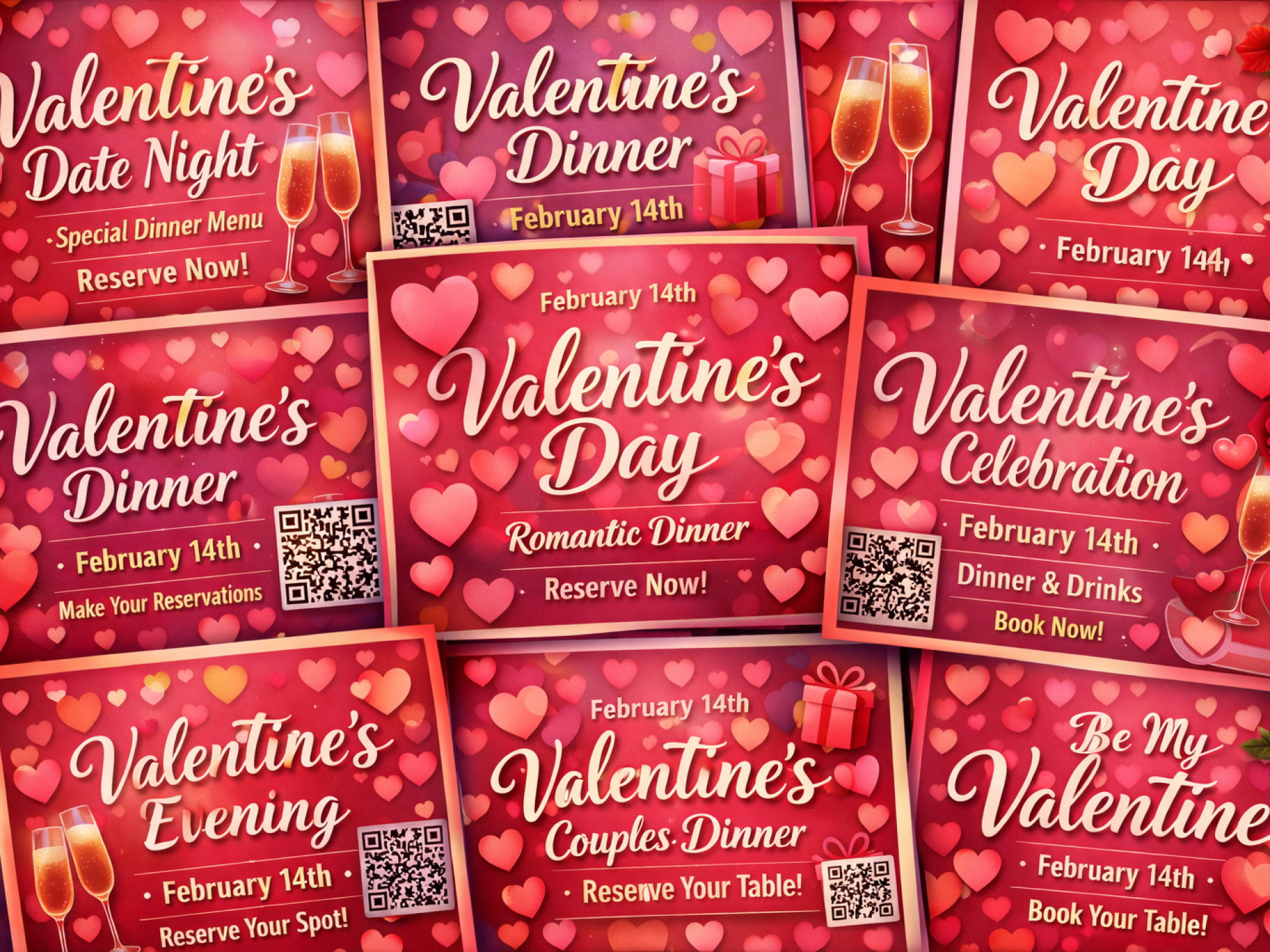
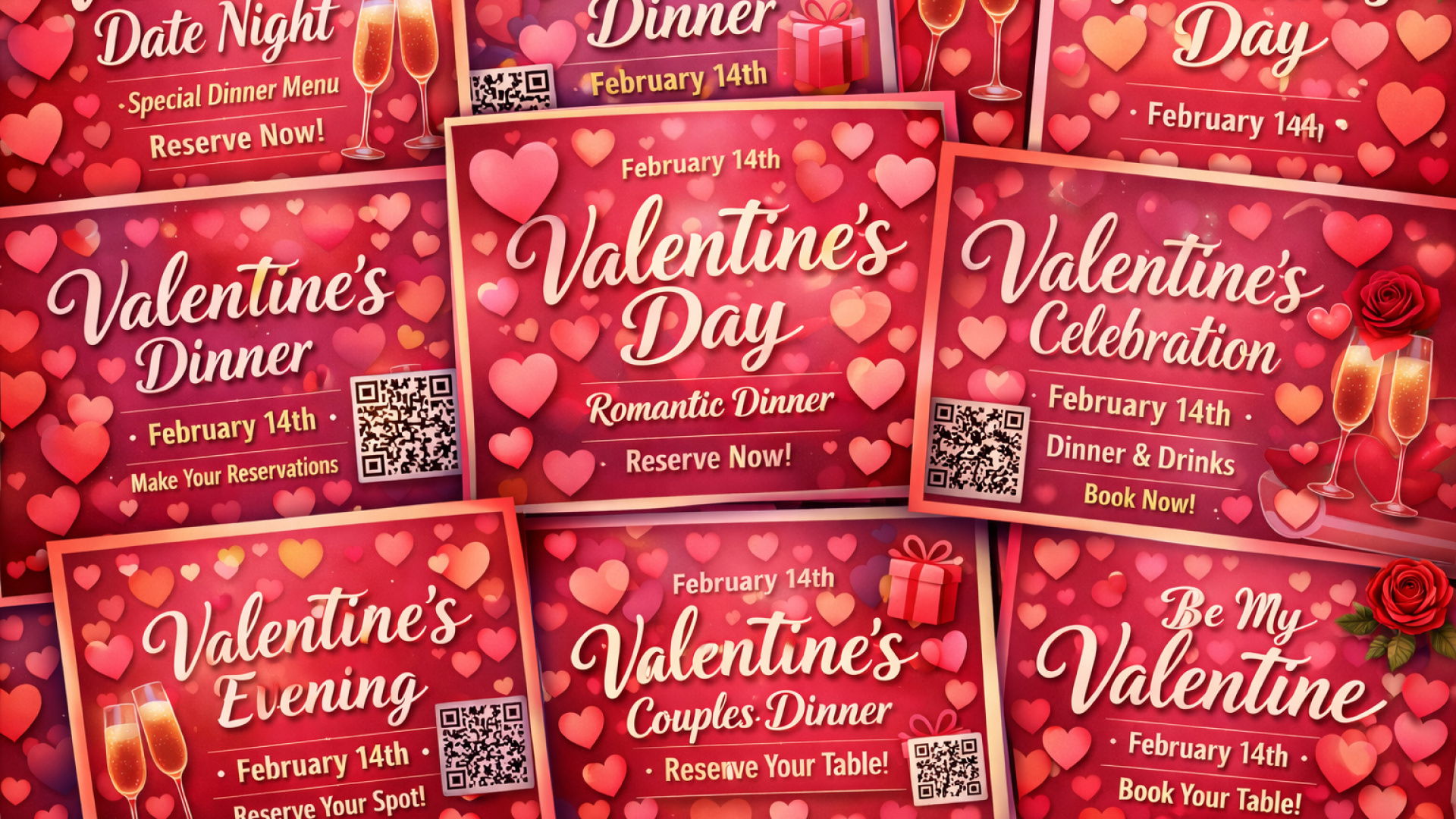
The other evening, I was scrolling through Facebook and saw five Valentine’s graphics from five completely different hospitality businesses. Different brands. Different towns. Different price points.
They all looked the same.
They included the same pink gradients, floating hearts, scripted fonts and several had very similar champagne flutes clinking in the centre, just with different logos dropped in the corners. And if you removed the logos, you’d struggle to know which company was which.
And that’s the danger here.
When your visuals are generated from the same patterns as everyone else’s, you’re not building recognition, you’re blending in.
In hospitality, differentiation is everything. Atmosphere. Personality. Tone. Local reputation. If your feed looks interchangeable with the café down the road and the pub two towns over, what does that say about your business?
Whether fair or not, customers subconsciously associate generic marketing with generic experiences.
The company that chooses not to rely on AI for every graphic, the one that invests in real photography, thoughtful layouts, even slightly imperfect but authentic visuals, is the one with the real advantage now.
For small restaurants looking to maintain authenticity, practical, low-cost alternatives include using smartphone photos, capturing candid staff moments, or encouraging customers to share their own images.
Better yet. find a local freelance graphic designer, hire them on a retainer basis to create social graphics for you - you'll see far better results.
These approaches not only foster a genuine connection with the audience but also ensure that visuals accurately reflect the establishment's unique atmosphere.
Because in a feed full of AI slop, authenticity stands out instantly.
When the technology actually breaks
I’ve seen AI-generated promotional graphics that included QR codes.
They looked convincing, but they didn’t work, because they were malformed.
It may have been that the person creating the graphic provided the correct QR code to the AI in the first place. But that didn’t matter. The final output wasn’t pixel-perfect. Somewhere in the generation process, it was altered just enough to render it broken.
AI doesn’t guarantee precision. It approximates. and a QR code only works if it is exact, every pixel in the right place. Slight distortion, smoothing, re-rendering or “creative interpretation” and it stops working.
Imagine the time and money wasted if someone prints a broken QR code on menus, putting it in a window, or promoting it on social media to drive bookings.
That’s not just a design issue - that’s a complete functional failure.
AI is very good at creating things that look right, but it’s not great at creating things that are right.
If you’re using QR codes, discount codes, or any other scannable elements, those assets need to be generated properly, tested, and not reimagined by a model that prioritises style over accuracy.
Even now, AI still struggles with text.
Typos, garbled letters, weird capitalisation. When you’re posting quickly, it’s easy to miss.
But the problem is, if your social graphics are riddled with typos and other issues, what does that signal to your customers? You don’t care about the details?
Maybe, and in hospitality, trust is fragile. Sloppy visuals create doubt, and doubt will cost you bookings.
The perfect food trap
AI is really good at generating beautiful images of food. The problem is that it often hallucinates things that don’t exist.
- Burgers the size of a small child.
- Pasta with ingredients you don’t use.
- Garnishes your chef has never touched.
- Upside-down peas.
The list goes on. and while perfect food imagery looks impressive, hospitality works best when expectations are set correctly.
There’s something I’ve seen others call the perfect burger problem.
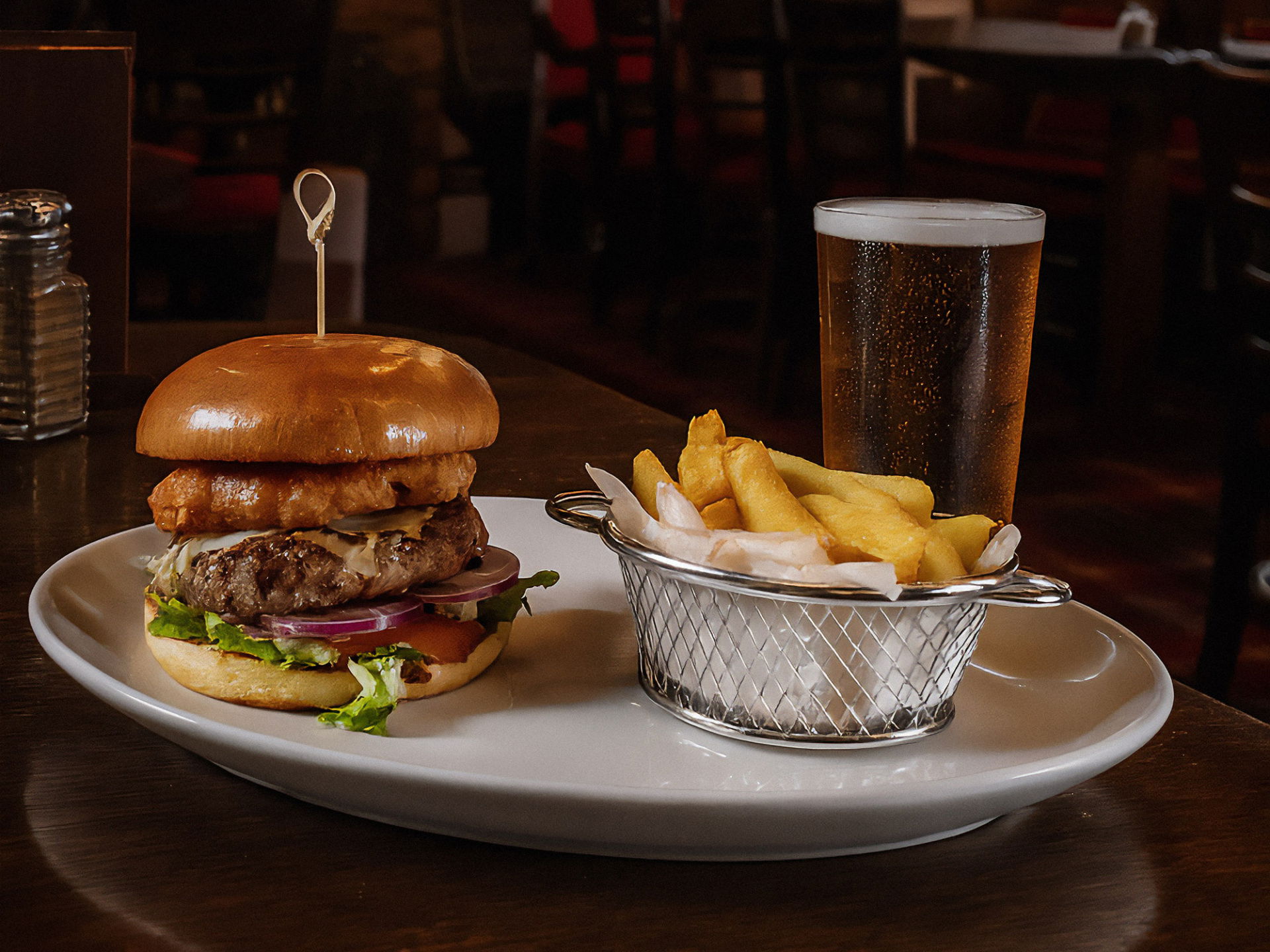
AI produces a cinematic, symmetrical, glossy burger, with pixel-perfect steam and melted cheese in exactly the right place. It looks like a global fast-food campaign took the picture.
But if the restaurant posting it is an independent, handmade spot known for messy, generous, real food, what expectation does that set?
If your strength is authenticity, don’t replace it with artificial polish. Use AI to enhance your real-food photography, improve lighting, tidy backgrounds, and refine composition.
Don’t fabricate perfection. Authentic will always win over AI slop.
Dependency on AI without a marketing strategy is the real risk.
When AI makes content creation instant, cheap and endless, it becomes tempting to generate post after post after post.
But with no brand framework, no long-term thinking and no creative restraint in place, it’s ultimately an empty approach that won’t benefit you in the long run. Instead of:
- Defining a clear visual identity
- Building consistent photography standards
- Developing a recognisable tone
- Creating a proper marketing strategy
It's super easy to fall into the trap of simply prompting and publishing.
Yeah, I get it - it feels productive.
But while this saves time in the short term, it weakens your brand equity in the long term.
Too long, didn’t read:
- AI is a powerful assistant, but it shouldn’t replace your brand thinking.
- Generic AI graphics reduce differentiation and make your business blend in.
- If your visuals look like everyone else’s, customers struggle to remember you.
- Functional elements like QR codes must be generated and tested properly, not visually approximated.
- Typography errors and layout inconsistencies quietly damage trust.
- Fabricated “perfect” food imagery can create expectation gaps.
- Excessive dependence on AI saves time now but weakens brand equity later.
In 2026, the hospitality businesses that will attract the most customers aren’t the ones using AI to generate the most content.
You can post every single day and still be forgettable - AI is just making it easier. Volume isn’t the same as presence, and customers won't be won by whoever posts the most.
Increasingly, the smarter approach is to resist the urge to automate your brand’s personality and protect the things that make your business distinctive in the first place.
Paul is the owner and lead developer at Easy Eatery, and a senior web developer at the award-winning Cardiff-based digital agency Everglow (formerly Blue Stag). With over twenty years of experience building websites for all kinds of businesses and brands, he now spends much of his time creating tools that make life easier for busy restaurant owners.
What planning our roadmap taught us about pricing